
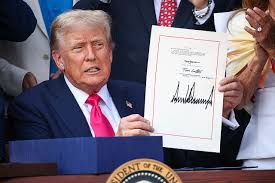
Whenever Congress creates a new savings vehicle, the legislation is only the beginning. The real work begins when the IRS and Treasury try to translate the statute into operational rules. That’s exactly what we’re seeing now with the proposed regulations for so-called “Trump Accounts.”
Trump Accounts were created under tax legislation enacted in 2025 and are designed as tax-advantaged investment accounts for children. The idea is simple: give families a way to start building long-term savings early in a child’s life. But like most things involving retirement and tax law, the details matter.
Under the program, the federal government plans to deposit a one-time $1,000 contribution into accounts for eligible children born between 2025 and 2028, provided a parent or guardian elects to participate.
Parents and others may also contribute up to $5,000 annually to the account. Employers may contribute up to $2,500 per year toward an employee’s child’s account as part of a contribution program, with overall limits applying to total annual contributions.
The accounts resemble individual retirement accounts in several respects. Funds generally must remain invested until the child reaches adulthood, and investments are limited to broad, low-cost index funds tracking U.S. equity markets. Eventually the account converts into a traditional IRA-type structure, with typical tax rules applying to distributions.
For the retirement plan community, the IRS proposal is an important step because it begins to answer operational questions. Who opens the account? How is the government contribution triggered? What responsibilities fall on parents, employers, and financial institutions?
Those questions matter because every new savings vehicle eventually creates administrative challenges.
Whether Trump Accounts become widely adopted remains to be seen. But one thing is clear: whenever the government creates a new tax-favored savings program, the financial services industry inevitably becomes part of making it work.
And as always, the devil is in the details.