
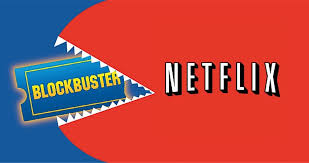
There are business mistakes, and then there’s what Blockbuster did when Netflix started tapping at the door.
Blockbuster wasn’t just a company—it was the way people watched movies. Friday nights meant wandering aisles, hoping the new release wasn’t already gone, and paying late fees when life got in the way. It was inconvenient, but it was familiar. And Blockbuster mistook familiarity for loyalty.
Netflix showed up quietly. No stores. No late fees. DVDs delivered to your mailbox. It didn’t look like a revolution—it looked like a quirky alternative. That was the first miss. Blockbuster saw Netflix as a smaller, less powerful version of itself instead of recognizing it as something fundamentally different.
Then came the second miss—the one that still makes people shake their heads. Blockbuster had the opportunity to buy Netflix early on and passed. They didn’t think it was worth it. Imagine hearing footsteps behind you and deciding not to turn around because you’re sure no one can catch you.
But the real failure wasn’t just missing Netflix. It was failing to understand where the world was going.
Here’s where it gets even more interesting. Netflix learned the lesson that Blockbuster never did. It understood that dominance is temporary if you don’t evolve. So while its DVD-by-mail business was still working, Netflix made a move that felt premature at the time—it pivoted to streaming. Not because it had to in that moment, but because it knew where things were heading.
Streaming wasn’t obvious to everyone yet. Bandwidth was inconsistent, technology was still developing, and many people weren’t ready. But Netflix didn’t wait for the world to catch up—it moved early and forced the change.
Blockbuster, meanwhile, stayed anchored to its stores. Its identity was tied to physical locations, late fees, and a system that had already started to feel outdated. Netflix had no such attachment. It was willing to abandon what worked in order to chase what was next.
That’s the difference between surviving and disappearing.
Blockbuster kept looking at what it had built. Netflix kept looking at what was coming.
By the time Blockbuster realized the threat, it wasn’t a threat anymore—it was the future. And the future doesn’t slow down so you can catch up.
What were they thinking?
Probably that being on top meant they’d always stay there.