
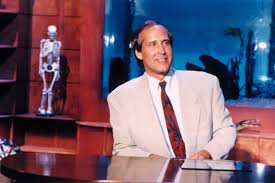
There are bad ideas, and then there are ideas that should have been stopped in the parking lot before anyone walked into the meeting. The Chevy Chase Show falls squarely in that second category.
By 1993, Chevy Chase was already sliding. The movie run that made him a star had cooled, the box office wasn’t what it used to be, and his reputation—let’s just say it wasn’t trending upward. So what’s the solution? Give him a nightly talk show.
Because nothing fixes a fading movie career like putting someone live, every night, in front of an audience, where personality matters more than anything else.
Here’s the problem: Chase was never built for that job.
Late-night hosting isn’t about being funny in bursts. It’s about being likable, curious, and generous with guests. Think Johnny Carson, who made it look effortless, or David Letterman, who turned awkward into an art form. They connected. They listened. They made the guest the star.
Chase? He came off stiff. Detached. Sometimes openly disinterested. Interviews felt less like conversations and more like obligations. And when your entire show is built on interaction, that’s a fatal flaw.
The result was predictable. Bad buzz. Awkward segments. Guests who didn’t click. And ratings that went south in a hurry. The show barely lasted a couple of months before getting pulled.
It’s a classic case of misunderstanding what made someone successful in the first place. Chase was great at playing a certain kind of character—smug, sarcastic, a little above it all. That works in movies and sketch comedy. It doesn’t work when you’re supposed to be welcoming people into your living room every night.
Not every star fits every format.
And sometimes, the worst career move isn’t failure.
It’s being put in a role you were never meant to play.