There’s a certain kind of victory that doesn’t come with applause. No trophy. No recognition. Just quiet proof that you made it through something that was designed—whether intentionally or not—to break you.
I’m still here.
If you’ve read anything I’ve written before, you already know the story. My mother is a narcissist. That’s not a label I throw around lightly—it’s a conclusion earned over years of experience, disappointment, and finally, clarity. More than 18 years ago, she tried to wreck my marriage and, in many ways, my life.
And she didn’t just leave damage in one place.
She destroyed my father. She destroyed my sister. She destroyed my aunt. She wore down my grandparents. Different people, same pattern. The kind of slow erosion that doesn’t make headlines but leaves lives permanently altered.
I saw it. I lived it. And I understood what staying meant.
I was supposed to be next.
But I didn’t stay.
I’m the one who got away.
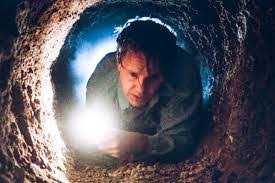
Like Andy Dufresne, I tunneled through her crap to get to the other side. It wasn’t quick. It wasn’t easy. It took years. But there is a point where you either accept the life being handed to you or you decide to dig your way out of it.
I chose to dig.
To my mother, I’m dead. And that’s fine by me. Because the version of me that existed within her world—the one constantly navigating chaos, manipulation, and emotional games—that person is gone. What replaced him is someone she never really understood.
That was always the flaw in her thinking.
She used to say she knew me better than I knew myself. At the time, that statement carried weight. When you grow up in that environment, you start to believe it. You question your own instincts. You defer to their version of you because it’s been repeated so often that it feels like truth.
But it wasn’t insight. It was control.
Narcissists don’t know you better than you know yourself—they define you in a way that makes you easier to manage. They assign roles. They tell you who you are, what you’re capable of, what you’ll never do, and what you’ll always need from them. And over time, if you’re not careful, you start living inside that version.
That’s the real damage.
Because once you accept their definition of you, you stop discovering who you actually are.
When I walked away, that was the first thing that broke—the illusion that she understood me. She didn’t. She understood the version of me that existed under her control. The moment I stepped outside of that, I became someone she couldn’t predict, couldn’t manipulate, and couldn’t contain.
That’s why she lost.
Life is a game of cards, and with me, she overplayed her hand. She thought she knew the cards I was holding. She thought she knew how I’d play them.
She was wrong.
She had no idea who I was.
And she could not destroy me.
I was stronger than she ever was.
And here’s the part I understand now, even if I don’t excuse it.
Her narcissism didn’t come out of nowhere. It came from a fracture early in her life. When my grandfather had tuberculosis and my grandmother couldn’t care for two young children, my mother was sent away to live with wealthy relatives for six months. When she came back, she told my grandmother she wasn’t her mother anymore.
That moment mattered.
I believe now that she tasted a different life—one with stability, comfort, maybe even affection—and then had it taken away. In Communist Romania, my grandmother made the only decision she could. It was the right decision.
But choices, even the right ones, have consequences.
And I paid a high price for that history.
I grew up under the rule of someone shaped by that fracture—someone who spent a lifetime trying to control what she couldn’t understand.
So I chose distance. I chose boundaries. I chose peace.
And what came after that decision was everything.
Health. Stability. A real marriage. A real life. The kind of success that doesn’t come from proving someone wrong, but from finally living without their weight on your shoulders.
Recently, I came across something that reminded me how little things change for people who never look inward. My mother reached out to someone she had long ignored—someone she had even disparaged in the past. Not to reconnect in any meaningful way, but to seek attention, sympathy, validation.
But this time, it didn’t go the way she expected.
My name came up because my friend knew the story—and knew exactly how to push her buttons. Not out of cruelty, but out of truth. Just enough to remind her of reality. And just like that, the narrative she was trying to create fell apart.
That’s the thing about living honestly—you don’t have to chase validation. It finds its way back to you.
Our lives are the sum of our choices.
She made hers. She’s unhappy.
I made mine. I’m happy.
And I’m still here.